Rashtrasant Tukdoji Maharaj – The Patriot Saint
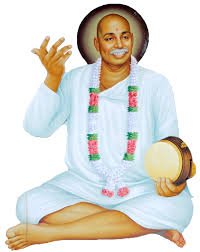
Rashtrasant Tukdoji Maharaj would have been 117 years if he were alive today. He was born on 30th April 1909 in a small village called Yawli in Amravati district of Maharashtra. His parents were Shri. Bandoji alias Namdev Ganeshpant Ingle and Mata Manjuladevi. The family was poor and Maharaj’s father worked as a tailor to make ends meet. Mata Manjuladevi not only took care of the household work but also worked as a farmhand to earn a livelihood. Maharaj was the only child of this hardworking village couple. His childhood name was ‘Manikdev’, but villagers lovingly called him ‘Tukdya.’
In 1912 Banduji lost his home in Yawli as he could not pay off a loan and the family shifted to Chandur Bazar where Banduji’s sister lived. In 1914 Tukdoji Maharaj was enrolled in the local Shishuvarg at Chandur Bazar for the first time. Later the family returned to Yawli and Maharaj was enrolled in the village school where he studied upto Standard 2. He was around ten years old at this time. Beside the school was a Panchamukhi Shiv Temple where he would often go to pray and sing bhajans. A wandering saint called Hanwatibaba came to this temple and the young Manik learnt to play the khanjiri from him. There was another follower of the Ramdasi Panth who came to Yawli during this time who would sing bhajans to the accompaniment of the Ektari. Manik would often go there as well and learned to play that instrument as well.
In the north of Yawli, there was another Shiv temple where Manik would sit in meditation. One day his father found him there in deep mediation with snake that had coiled around him and spread its hood above his head. At other times he would mix up with the village boys like another other child and go swimming in the river, wander in the forests or while away time singing bhajans. His father, was so angry with the wayward boy that he threw him out of the house. The ten-year old Manik left home and walked to Amravati to his aunt’s house. When his aunt did not take him in, he went to the Ambadevi temple. A kind-hearted man Bapusaheb Mene took him home. A few days later he left Amravati and walked several days to reach Varkhed where he met his spiritual master Sadguru AdkojiBaba. For a month he stayed in his maternal uncle’s house in Varkhed and served his Guru.
Although Manik returned to Yawli, there was no change in his character. He continued to roam the forest and villagers considered him somewhat mad. This time his father threw out Manik alongwith his mother Mata Manjuladevi. Both of them had no other place to seek shelter except Manjula’s paternal home at Varkhed where her brother Govindrao lived. Manjula Mata lived at her brother’s house but young Manik did not leave the side of his Guru. He was admitted in the school at Varkhed in Standard 3 but he remained restless and eventually did not sit for the exams.
In 1921 Sadguru Adkojibaba died leaving behind his disciple grief-stricken. In 1923, when Maharaj was barely fourteen years old, he went to the great spiritual site Pandharpur and thereafter returned with his mother to Yawli. He tried his hand at tailoring, but the spiritual restlessness drove him to sell the sewing machine and giving away all his worldly possessions. In 1925, the sixteen-year Tukdoji finally left home and decided to go to Ramtek. Deep in the forests he met an unnamed Yogiraj, who took him to his hermitage and taught him the hatha-yoga.
An important incident in the life of Tukdoji Maharaj occurred in 1925 when he came to Neri in Chandrapur district at the invitation of Krushnarao Bhute. Manikdev would sing beautiful bhajans which brought the villagers of Neri close to him. His restless soul guided him to the Hemadpanthi Bhuteshwar Shiv temple at Neri, where he would sit alone to meditate. Some ancient manuscripts in Modhi-lipi fell into his hands through the help of a Sadhu, which he studied sitting in the Bhuteshwar temple. The manuscript comprised a portion of the Vedanta. Not only did he study the manuscript but based on it he composed ‘Atmaprabhav’ and ‘Anandamrut’ in 1926-27 based on his Vedantic studies.
Emerging from his sadhanas, Tukdoji Maharaj began his work amongst the ordinary people of the village community and was given the name ‘Dev Baba’ by them. He began opposing superstitions such as mantra-tantra and other false practices by which imposters posing as God-men sought to exploit ordinary people. By this time, Maharaj had started writing and composing poetry and in 1929, Tukdoji published his first collection of bhajans in Hindi. He also travelled widely to Kashi prayag, Omkareshwar, Haridwar, Pushkaraj, Pashupatinath and came in contact with many spiritual sants.
He studied the condition of society around him and chose the cultural methods of Saptah-Bhajan-Gyancharcha to reach out to common people, yet his vision was reformist and he infused new perspectives in these traditional practices. He put forward the concept of ‘Shri-Gurudev’ rather than any particular personal deity, to bring together people from all walks of life, from all classes, castes and religions. Hundreds were attracted to this youthful saint with his innocent smile and powerful speech. He astonished them with his clarity of thought as much with his skills in music, yoga and endless energy.
In 1930 Tukdoji Maharaj sang ‘Jhoothi ghulamshahi kya dar bata rahi hai? Why is this slavery trying to scare us? His song inspired people to join the freedom struggle, filling the audience with patriotic fervor against colonial rule.
In 1933 he organised the first chaturmas – a four-month long spiritual and social retreat at Chimur. In 1935 he led the Mahayagya at Salburdi. All this religious- cultural- spiritual- social programmes made Tukdoji Maharaj a revered name.
During the Quit India Movement of 1942, Tukdoji Maharaj played a great leadership role. His famous bhajan ‘jhadjhadule shastra banenge, bhakt banegi sena, patthar sare bomb banenge, naav lagegi kinare’ led villagers in Chimur and Ashti to rise up in revolt against colonial rule. The British rulers arrested Maharaj and incarcerated him for four months in Nagpur and Raipur prisons. After his release, he was externed from Chandrapur and Wardha districts but he continued to serve the people wherever he went.
In 1943 the monthly magazine ‘Srigurudev’ was initiated. Maharaj organised his followers at the village, block district and area levels through the Sri Gurudev Seva Mandal. Through these groups he initiated a range of social activities including industrial classes, physical education, Ayurveda classes, women’s education etc. He emphasized on community prayers, panchmahotsav, reforms in pilgrimage, marriage rituals, stopping animal sacrifices, anti-addiction and a simple life.
Maharaj placed equal stress on developing physical and spiritual strength. To that end the organised the Maharashtra Physical Education movement in 1946 at Nagpur. In the same year h also led the temple entry movement in many temples beginning with the one in Varkhed.
After India became free in 1947, Maharaj increased his efforts to bring the fruit of independence to the poorest of the poor in rural areas. He was a powerful orator and addressed innumerable convention and gatherings including those organised under the auspices of the Maharashtrian Traders Conference, All India Rastrabhasha Prachaar Sammelan, Samaj Sevi Sammelan, Vidarbha Sahitya Sammelan, All Indian Deaddiction Conference and so on. He travelled to Punjab to address the Vedanta Parishad. He was at the forefront of the Sikh conference, Veershaiva conference, Parsi conference, Christian celebrations and even the Muslim gathering at Bhandara. He formed the ‘Bharat Sadhu Samaj’ and chaired the common organisation of Mahamandaleshwaras across India. In 1955 he attended the International Peace Conference in Japan.
During the Indo-China war, he went to the warfront and met Indian soldiers, filling them with courage and patriotism through his words and songs.
Rashtrasant Tukdoji Maharaj was associated with the social and political movements of his times and offered support to many social, progressive, reformist movements. He was a firm supporter of Sane Guruji’s temple entry movement. He was also active in Acharya Vinoba Bhave’s Bhoodan movement. In 11 days, Maharaj procured 11000 acres in the Bhoodan yagya. He strove to develop 100 villages as ‘Ideal Villages’ in memory of Mahatma Gandhi, and conducted ‘Charkha Yagya’ of 500 charkhas.
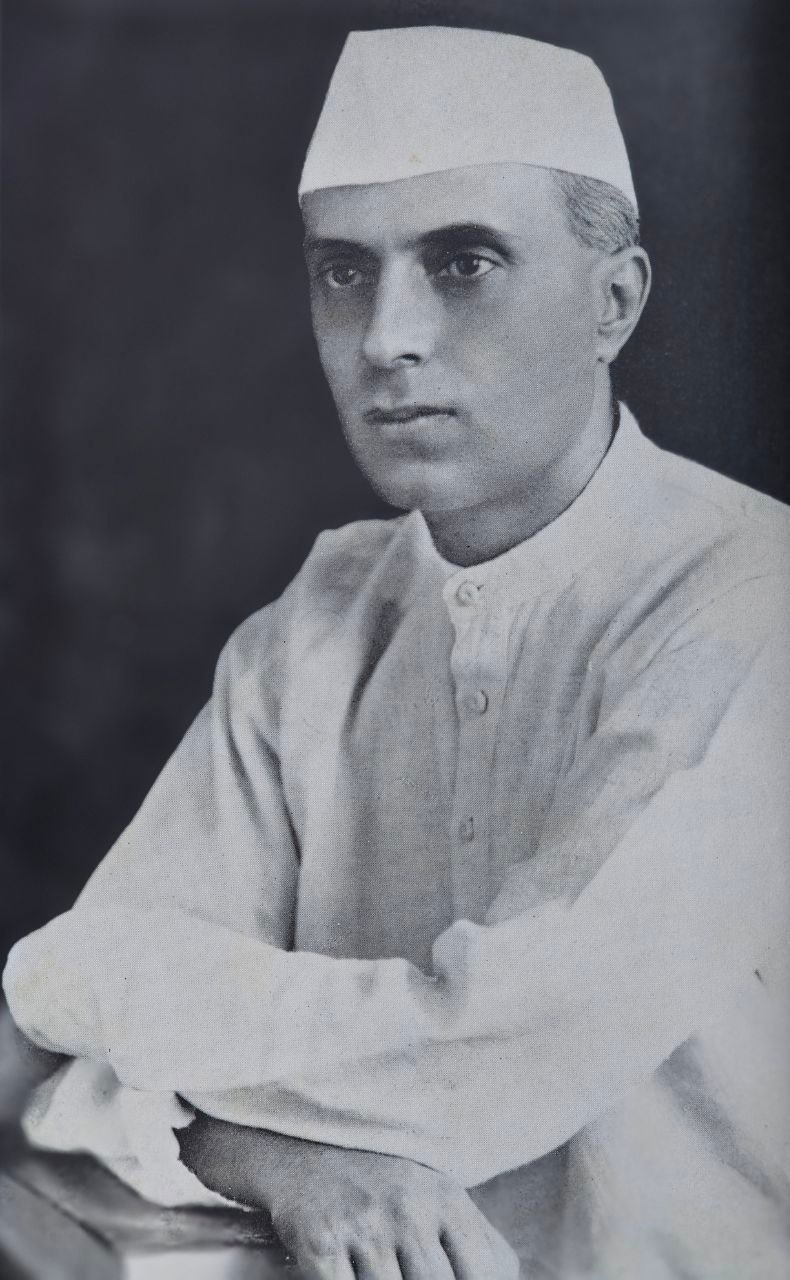
Maharaj was associated with stalwants like Mahatma Gandhi, Pandit Madan Mohan Malviya, Pandit Jawaharlal Nehru, Lal Bahadur Shastri, Dr. Radhakrishnan, Dr. Punjabrao Deshmukh, Jai Prakash Narayan, Acharya Bhave and many others. He worked with leaders across the political divide as in obvious through his association with Dr. Hegdewar of RSS and with leaders of the Vishwa Hindu Parishad.
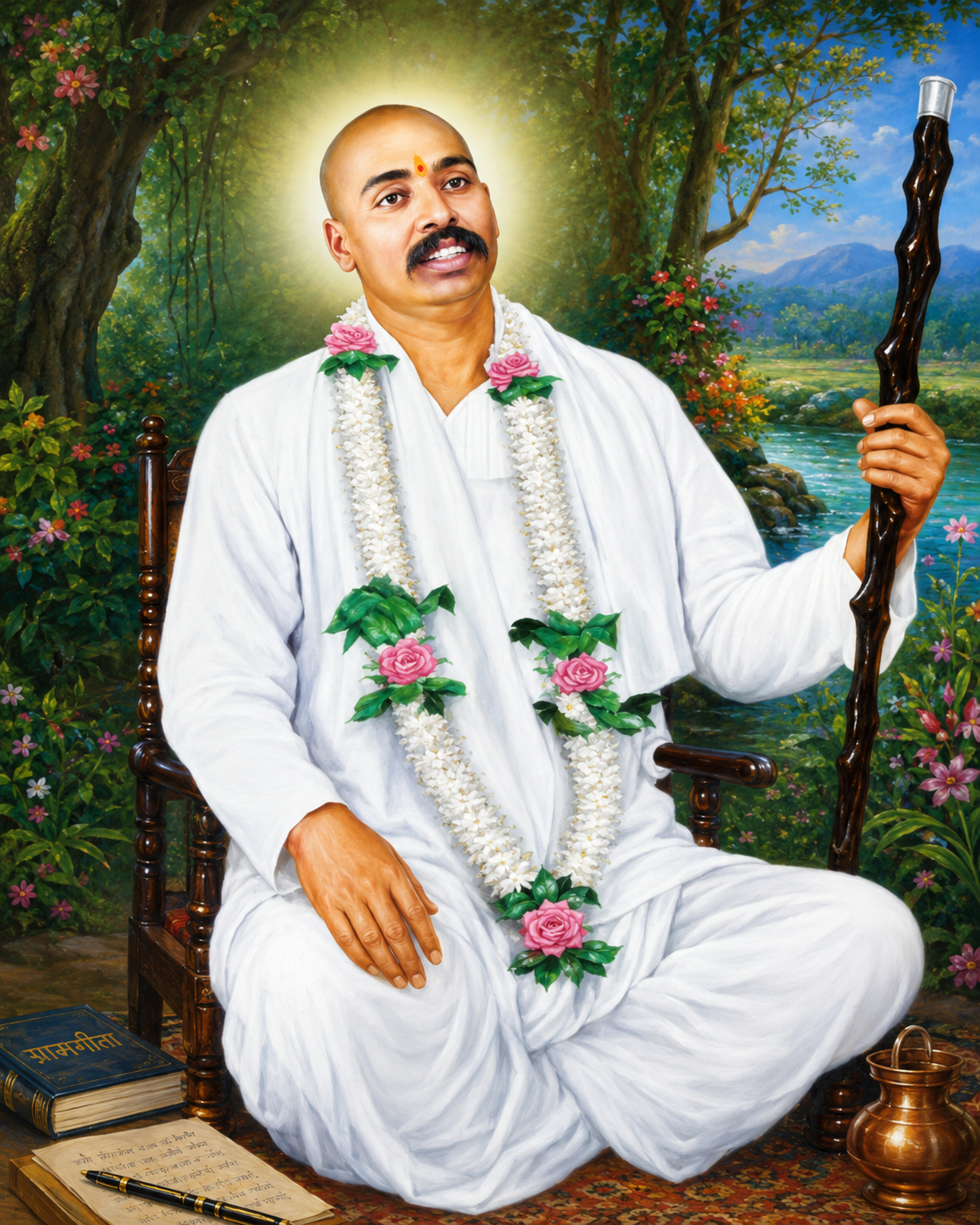
Rashtrasant Tukdoji Maharaj was a prolific writer and composer. He wrote hundreds of bhajans, kirtans, prathanas, leher ki barkha, articles, essays and books. His magnum opus is the Gram Geeta published in 1955 which is dedicated to the all-round development of the farmers of India and the rural community in general. The book contains the essence of Maharaj’s thoughts on how the sufferings of the rural poor could be alleviated through local, organised efforts based on deep personal commitment and spiritualism. One may say that the book is his plan from rural development through spiritual upliftment.
Maharaj was afflicted with cancer and even while suffering great pain, he continued to meet people, after prayer and write articles. He addressed his followers on the AIR. He requested them to construct a cancer Hospital at Nagpur. Even towards the end Maharaj addresses the press and conducted all-religion prayers. He breathed his last on 11th October 1968. However, Rashtrasant Tukdoji Maharaj continues to live through his vast literature and the myriad social and religious organisations that he was associated with, through the commitment of hundreds of devotees and volunteers of the Sri Gurudev Sewa Mandal and most of all in the hearts of the rural villagers who continue to sing his bhajans and drawn inspiration from his words.
Paromita Goswami
(the author is a writer and social activist)
This article is the first in a series on the life and literature of Rashtrasant Tukdoji Maharaj